

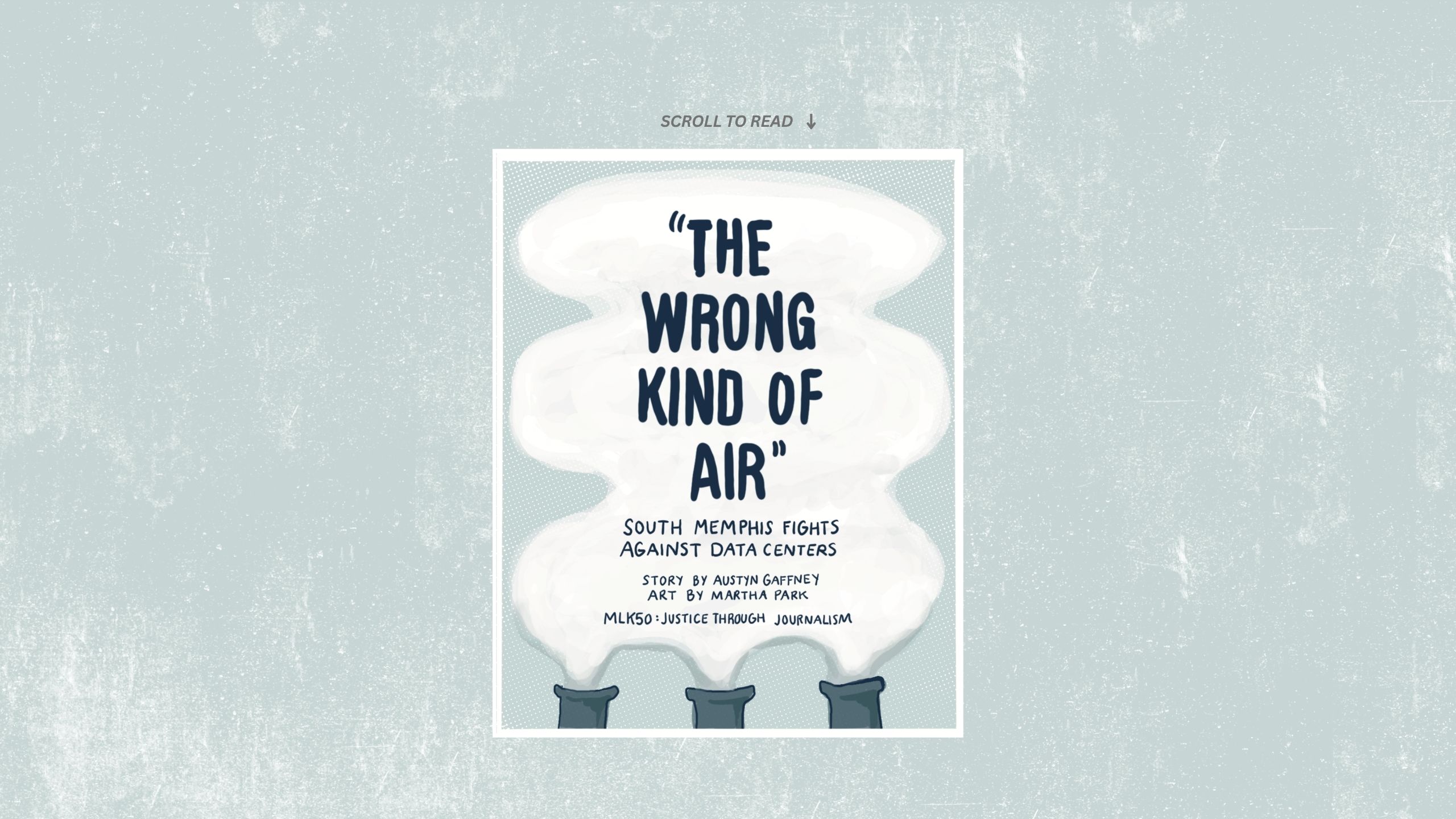





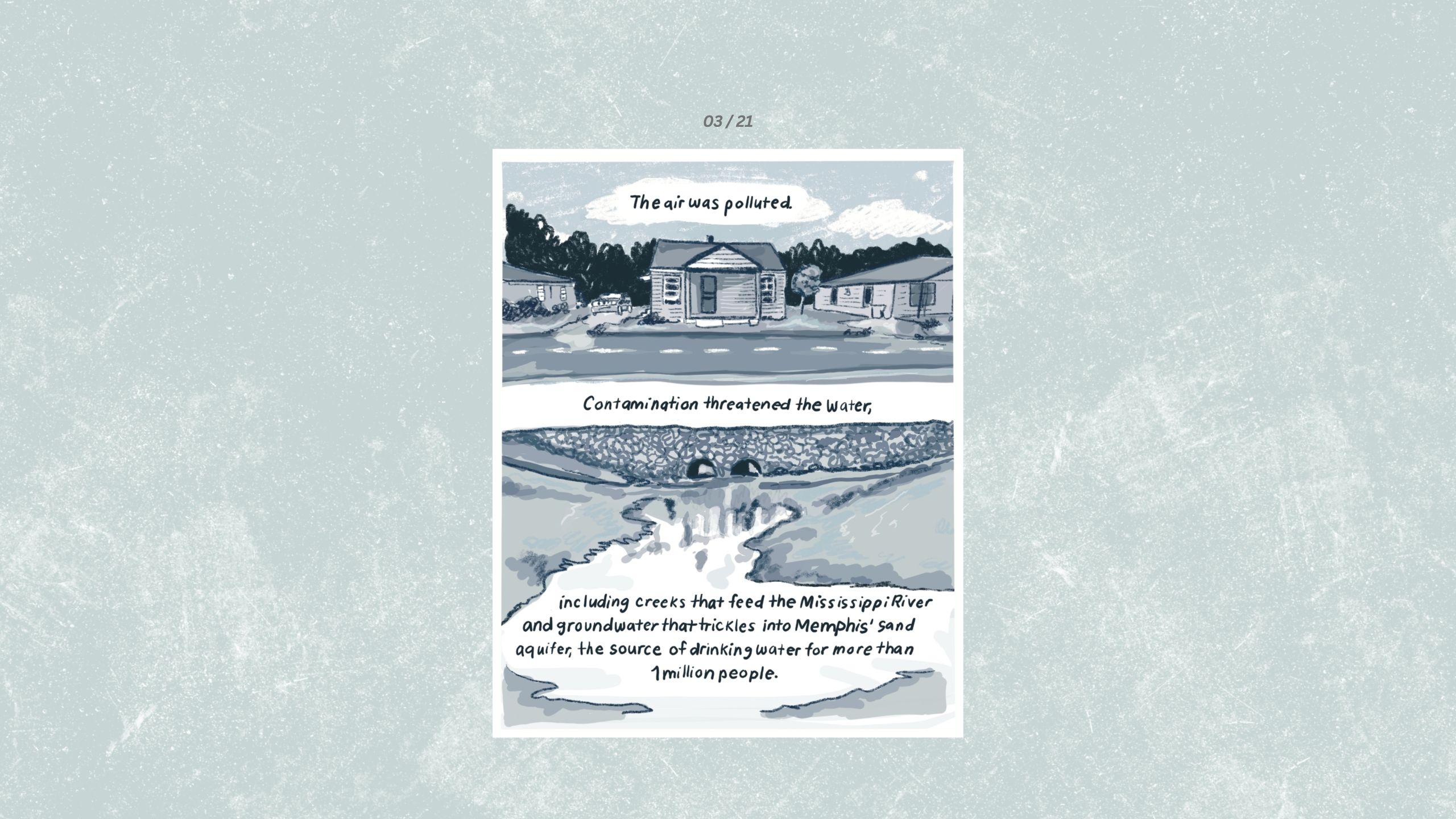



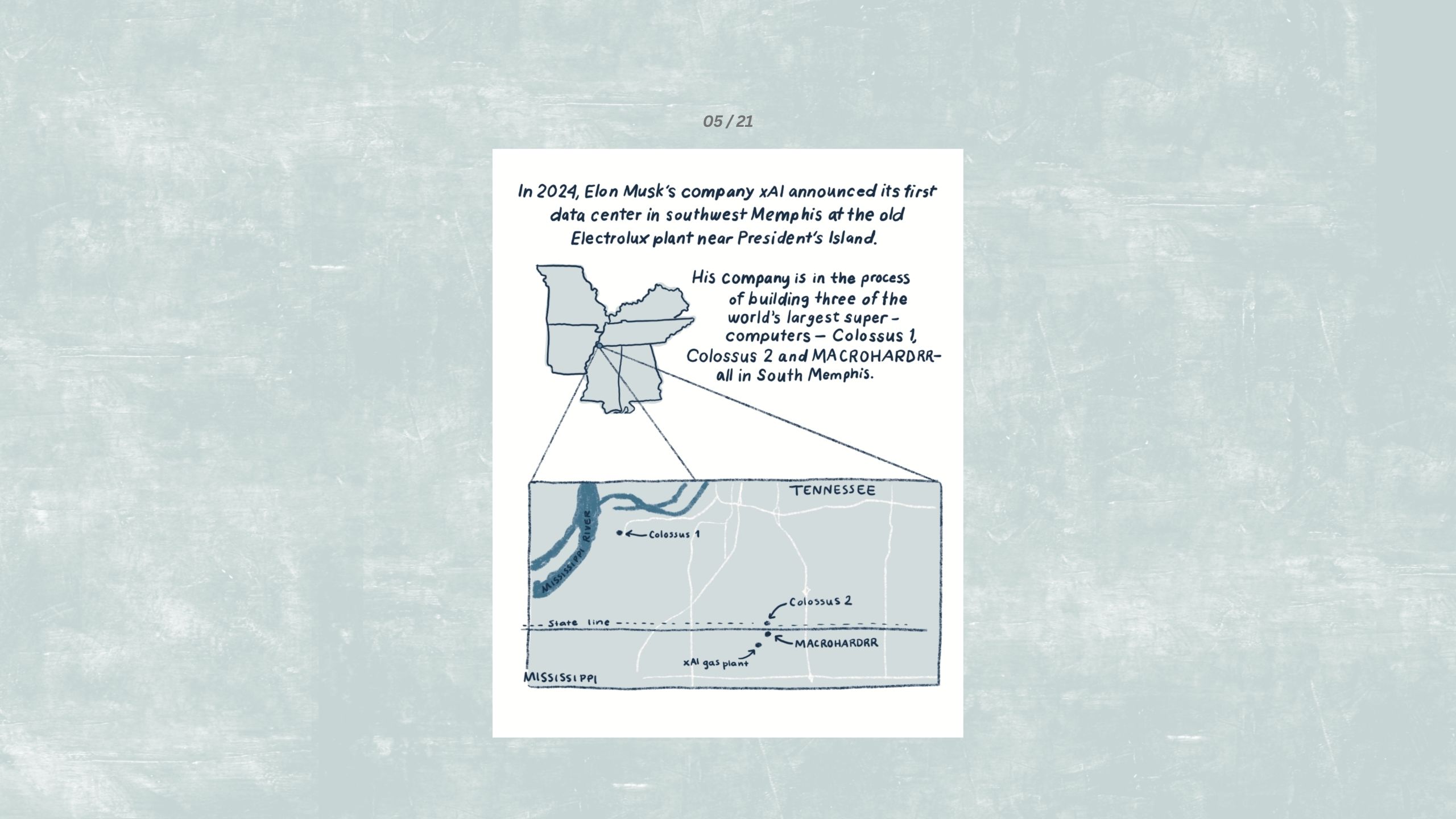













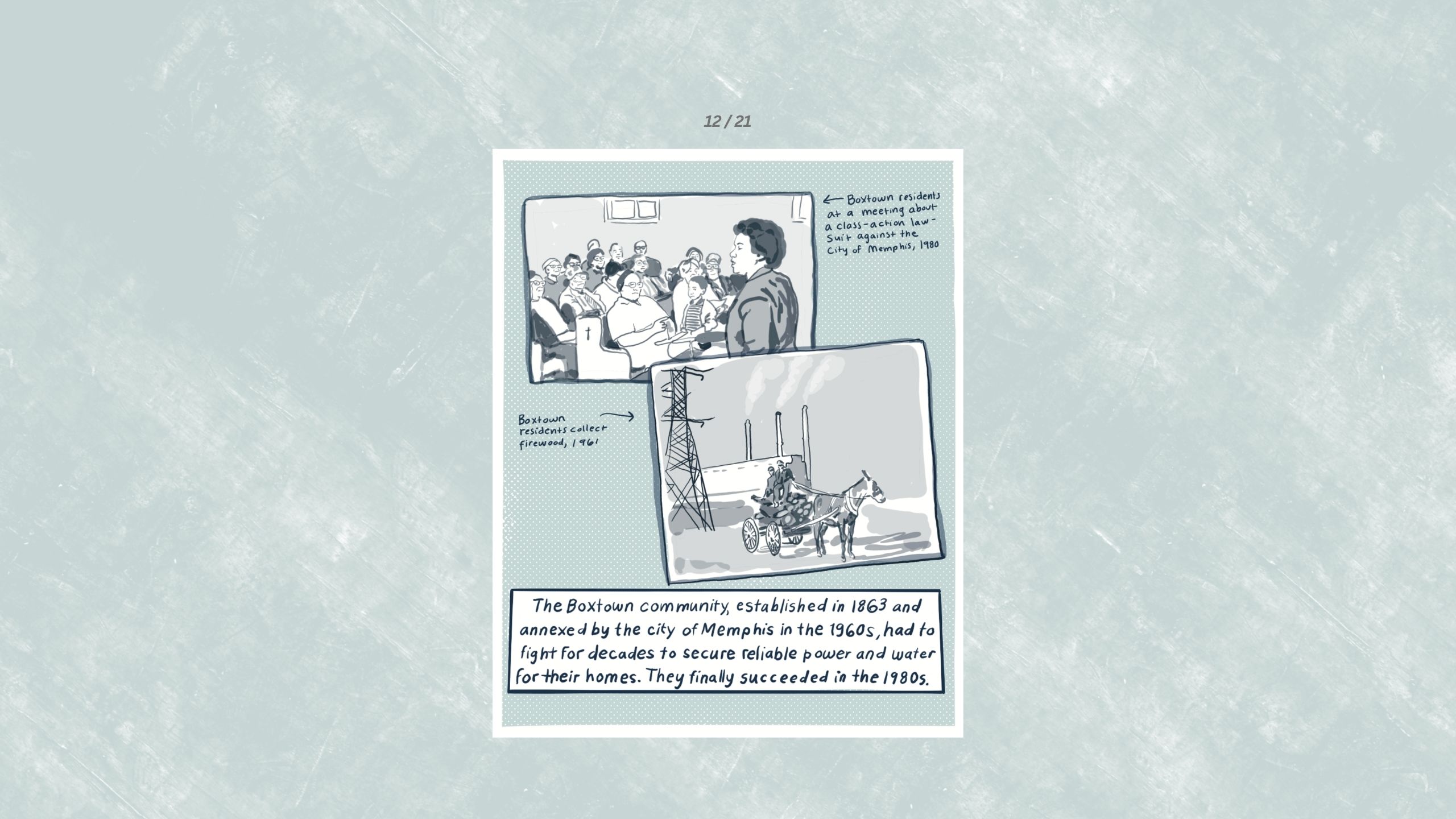
















MLK50: Justice Through Journalism created this resource to help tell the stories of a community’s fight for its health. We did so with support from the Economic Hardship Reporting Project and Trusting News.
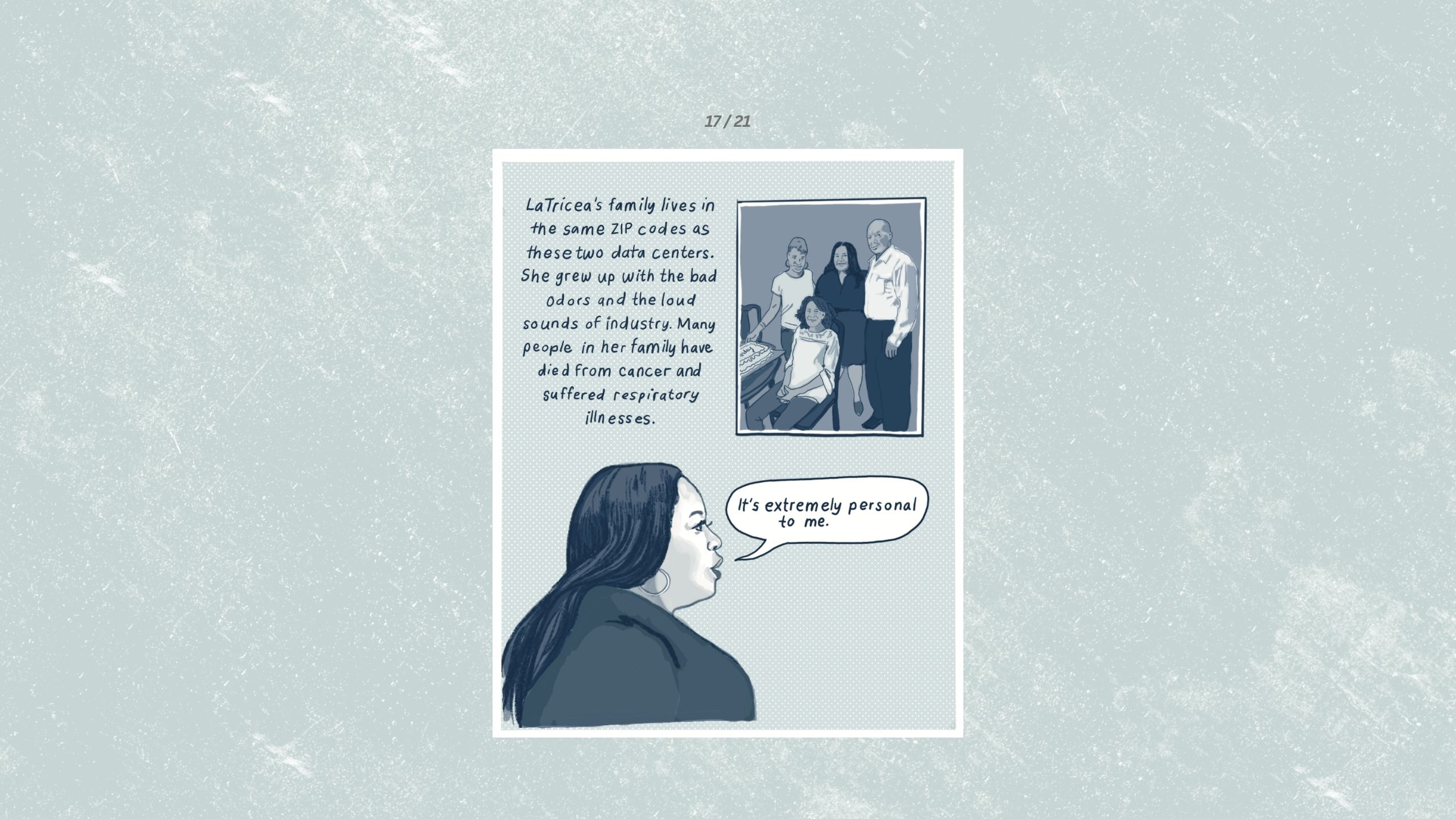
We want to thank Easter Knox, LaTricea Adams, Jasmine Bernard, Johnathan Isom for sharing their stories. We want to celebrate Young, Gifted and Green, Memphis Community Against Pollution, the Southern Environmental Law Center, Protect Our Aquifer and all the other organizations for their continued work.
And we want to honor and uplift the people of Southwest Memphis who should not have to breathe the wrong kind of air.


F.A.Q. | Data Centers
SCROLL DOWN
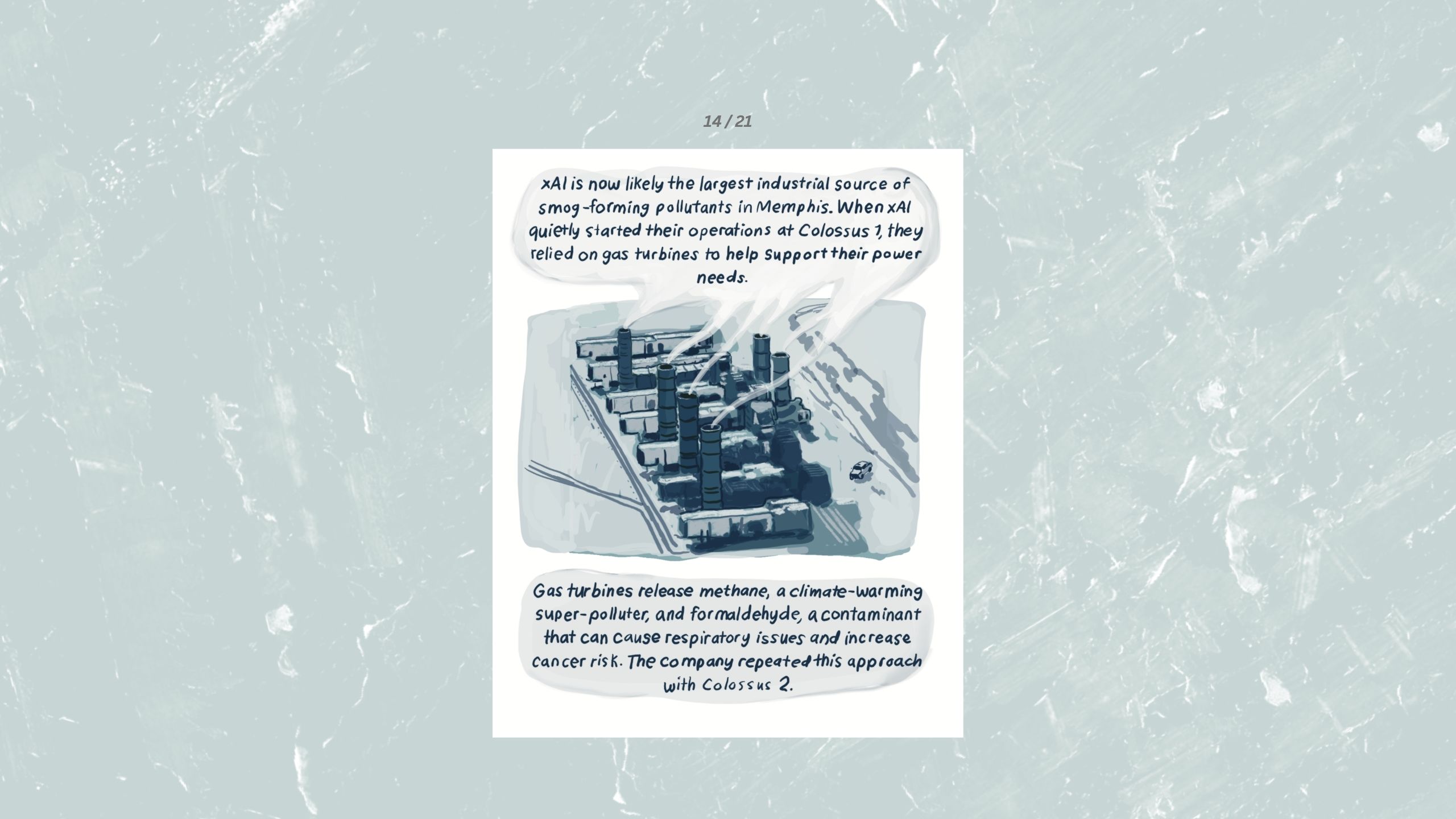
Emissions from the turbines at xAI's Colossus data center on Riverport Road. Video by Andrea Morales/MLK50


What is a data center?
A data center is basically a facility that houses servers (a computer that “serves” other computers) — computer equipment that can be used to process, store, and transmit digital information for users. Even though the debate over data centers is recent, data centers have existed for decades
Why and how do data centers consume water?
Data centers use water directly and indirectly. The direct water usage is for cooling the servers. Indirect water usage is for generating electricity; that water is typically the municipal water. According to the Susquehanna River Basin Commission, most communities in the United States don’t have the available surplus capacity to support the demand from data centers.
What are the local air impacts of data centers and what are the sources of unhealthy emissions?
Data centers are installing a lot of backup generators, and although they are called “backup,” they are not only operated during an actual outage. They are also operated for regular maintenance, and also when there’s not enough room on the power grid. These generators are mostly powered by diesel, and this can pollute the air by releasing large amounts of nitrogen oxides, like those in PM 2.5, which are fine particles that can penetrate deeply into people’s lungs and create immediate health outcomes like asthma, a heart attack, even premature death.
Answers adapted from a SciLine brief, jointly hosted with the American Association for the Advancement of Science, with panelists Dr. Ayse Coskun of Boston University, Dr. Xiaofan Liang of the University of Michigan and Dr. Shaolei Ren of the University of California, Riverside.


 Built with Shorthand